Gut and microbiome analysis
What this is
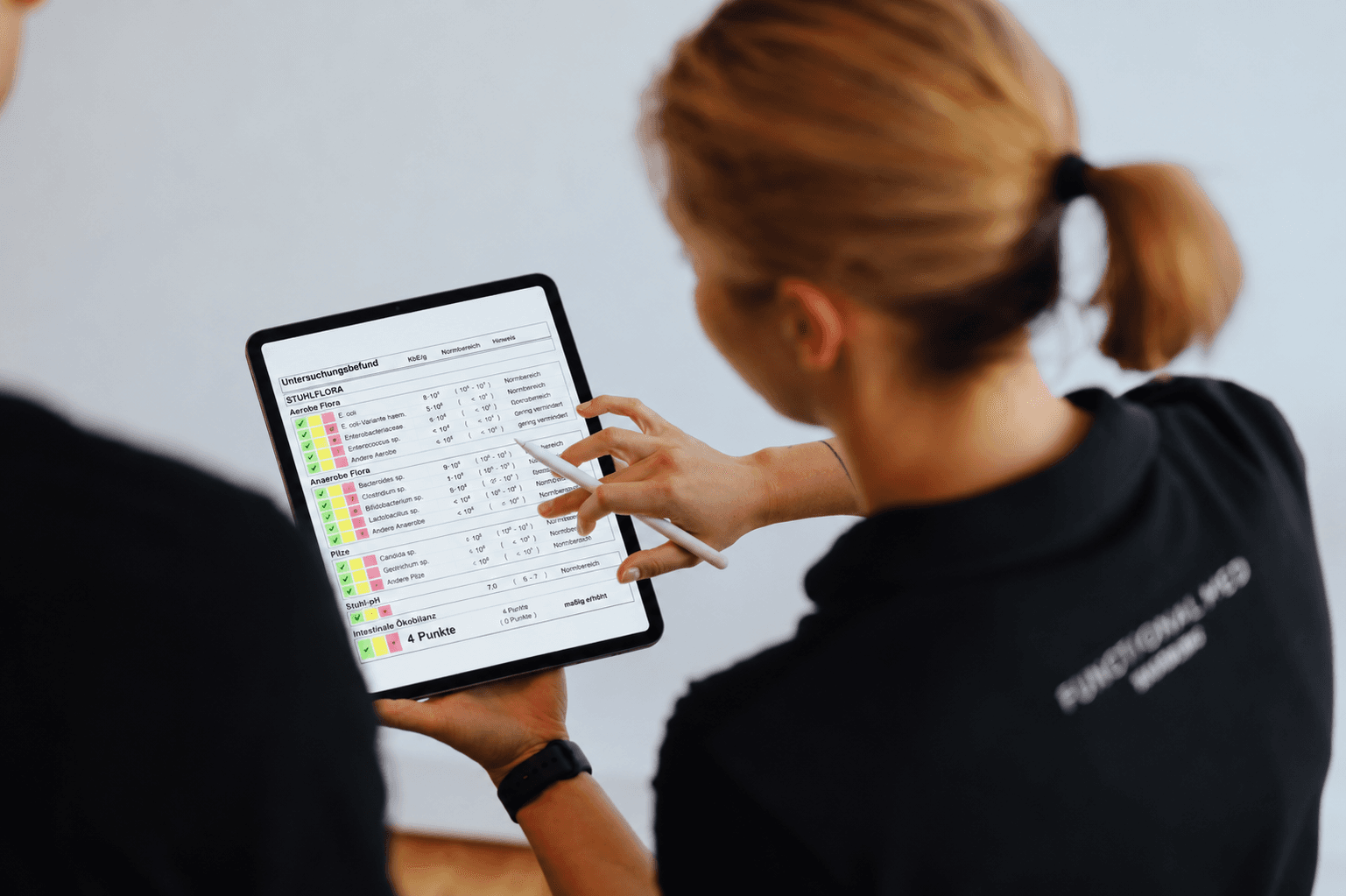
The gut hosts a vast number of bacteria involved in digestion, nutrient absorption and the regulation of the immune system. A microbiome analysis gives an impression of that population and indicates whether, and where, to start.
Where it can help
How it works
A conversation, sample collection at home with a kit, analysis in the laboratory, then the discussion of your results.
From the report we derive concrete steps, usually diet first, then targeted supplementation.
Preparation
We give you a kit and you take the sample at home, in your own time. It goes to the laboratory by post and the instructions come with it.
Three things matter for a meaningful result. Eat as you normally do in the days beforehand, changing your diet changes the picture. Take no antibiotics in the fourteen days before collection. And stop probiotics seven days before.
Pick a collection day that gets the sample to the laboratory within four days. Sunday to Wednesday works best.
More services
What else belongs to Functional Medicine
Questions about this service
Frequently asked
Do I have to hand the sample in at the practice?
No, you take the sample at home with a kit you get from us. Sending it to the laboratory is explained and straightforward.
What does the result actually give me?
You receive an interpretation of your gut population and recommendations derived from it, primarily on diet, supplemented by targeted support. We are deliberately careful in how we phrase this: microbiome research is young, and many connections are not yet conclusively understood.
Does this replace a gastroenterological assessment?
No. With warning signs such as blood in the stool, unintended weight loss or persistent severe pain, assessment belongs in a doctor's hands. We point that out.
Related
What patients often look for here as well
Blood diagnostics and health check
A blood panel shows connections you cannot see from the outside: where inflammation markers stand, how your metabolism is working, whether important nutrients are missing. We do not turn to laboratory analysis only when a therapy stalls, often we use it from the start, as a second pillar alongside treatment.
→ServiceMicronutrients and orthomolecular medicine
Micronutrients are vitamins, minerals, trace elements and amino acids, the building blocks your metabolism works with. Orthomolecular medicine is about balancing those building blocks in a targeted way. The most important part is not the preparation but the measurement that comes before it.
→AreaFunctional Medicine
Some complaints cannot be treated away. Targeted laboratory diagnostics can point to connections the hands cannot find: inflammatory processes, micronutrient deficiencies, a metabolism that has slipped out of rhythm.
→TeamLilith Laube
Heilpraktikerin (state-licensed non-medical practitioner), osteopath and physiotherapist in Hamburg. Focus: laboratory medicine, micronutrients and infusions.
→Microbiome analysis, book with no obligation.
Who
This area is led by Lilith Laube, Heilpraktikerin (a state-licensed non-medical practitioner), osteopath and physiotherapist, with many years of further training in infusion medicine, laboratory diagnostics, gut and microbiome therapy, orthomolecular medicine and metabolic regulation.
See the whole team →